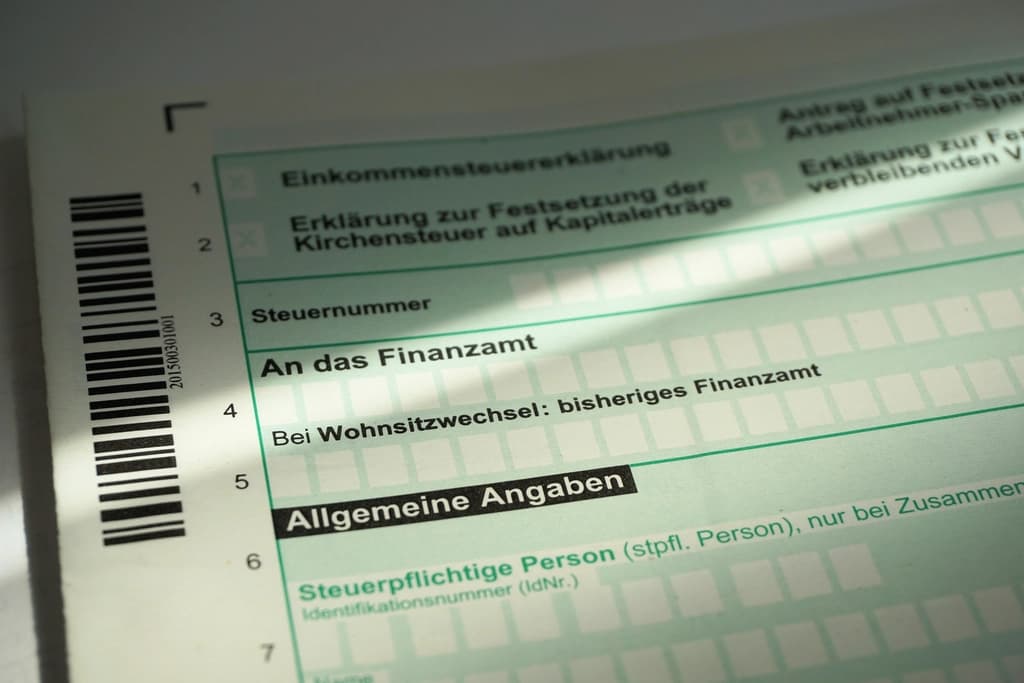
How much tax do you actually pay when selling a U.S. ETF? Most Korean investors have heard "22%" but have never worked through the math themselves. If you buy and hold VOO, SCHD, or QQQ directly, you should walk through this tax structure by hand at least once before you ever hit the sell button. This guide covers currency-gain calculations, how the 2.5M KRW deduction works, loss-netting, and how to file — all with real numbers.
This article is for information only (based on 2026 Korean tax law) and is not tax advice. Rates, deductions, and filing rules can change with government policy, so confirm important filings with the National Tax Service (NTS) or a licensed tax advisor. Updated August 17, 2026 after checking it against the 2026 tax reform proposal unveiled in late July — bottom line: the overseas-ETF structure (22%, 2.5M KRW deduction) is unchanged.
The Basic Structure: 22% on Overseas ETFs, a 2.5M KRW Annual Deduction
When you sell overseas stocks or ETFs (U.S. NYSE/NASDAQ, Japan, or other foreign exchanges), these rates apply to your capital gains:
- Capital gains tax (양도소득세): 20%
- Local income tax (지방소득세): 2% (10% of the capital gains tax)
- Total: 22%
There is also an annual 2.5M KRW basic deduction (기본공제). If your total capital gains for the calendar year (Jan 1 – Dec 31) are 2.5M KRW or less, your tax is zero. Crucially, this 2.5M KRW deduction is applied once per year across combined domestic and overseas stocks — not 2.5M for U.S. ETFs plus another 2.5M for Korean stocks (NTS — Capital Gains Tax calculation flow).
One more condition: the rule taxes overseas-stock gains realized by a resident who has held a domicile or residence in Korea for at least 5 years up to the sale date (NTS — Overseas-stock capital gains tax). Most Korea-resident employees and investors fall under this.
Korean-listed ETFs (KODEX, TIGER, ACE, etc.) have a completely different tax structure (compared in a table below). The "22% capital gains tax" in this guide is specifically for ETFs listed directly on U.S. exchanges that you bought directly.
The 2026 Tax Reform Proposal Leaves "2.5M Deduction + 22%" Untouched
Korea's 2026 tax reform proposal, unveiled by the government in late July (a government draft — not yet passed by the National Assembly), makes sweeping changes to inheritance tax, real-estate taxes, and income-tax brackets. But it does not touch the backbone of overseas stock/ETF taxation — the 22% rate, the 2.5M KRW annual deduction, loss-netting, and the May filing (Ministry of Economy and Finance — tax reform press releases). Everything this guide calculates remains valid as of August 2026, and stays valid even if the draft passes as-is.
What overseas investors should actually watch is the change on the Korean-stock side. The draft rolls the "major shareholder (대주주)" threshold for listed stocks back from 5B KRW to 1B KRW per stock. Until now, the asymmetry — "Korean-stock trading gains are tax-free (unless you're a major shareholder), while overseas ETFs always pay 22%" — was the classic drawback of investing abroad. Under the draft, anyone holding 1B KRW or more of a single Korean stock at year-end becomes a major shareholder and pays 20–25% (22–27.5% with local tax) on that stock's gains. For large domestic holders, the relative math versus overseas ETFs — "everything taxed, but with a 2.5M deduction and a flat 22%" — needs recalculating. The draft also floats raising the securities transaction tax from 0.15% toward 0.2%.
For context, the crypto tax confirmed to start in January 2027 uses the very same skeleton — an annual 2.5M KRW deduction plus 22% separate taxation. The overseas-stock structure is effectively becoming the standard template for taxing retail investment in Korea, so the math you learn in this guide will carry over.
Note: the major-shareholder and transaction-tax items above are a government draft; the numbers and effective dates can change during National Assembly deliberation (typically November–December). The overseas-ETF rates, deduction, and filing rules in this guide, by contrast, are current enacted law.
Calculating Your Gain: KRW Is Everything
This is where most mistakes happen. Do not calculate in USD. Your gain is the difference between your purchase cost converted to KRW and your sale proceeds converted to KRW.
The Formula
Capital gain   = Sale proceeds (KRW) − Purchase cost (KRW) − Transaction fees
Taxable income = Capital gain − 2,500,000 KRW (annual deduction)
Tax            = Taxable income × 22%
Transaction fees = brokerage commissions on both buy and sell. FX conversion costs are usually baked into the trade price, so what matters here is the brokerage commission.
Worked Example — 100 Shares of VOO
Suppose you traded 100 shares of VOO under these conditions:
- Buy: $400/share, exchange rate 1,200 KRW/$ → KRW cost = $400 × 100 × 1,200 = 48,000,000 KRW
- Sell: $500/share, exchange rate 1,380 KRW/$ → KRW proceeds = $500 × 100 × 1,380 = 69,000,000 KRW
- Total commissions: 100,000 KRW
Capital gain   = 69,000,000 − 48,000,000 − 100,000 = 20,900,000 KRW
Taxable income = 20,900,000 − 2,500,000            = 18,400,000 KRW
Tax            = 18,400,000 × 22%                  = 4,048,000 KRW
The effective rate is about 19.4% (4.048M tax on a 20.9M gain) — lower than 22% because the 2.5M deduction shrank the gain first.
Tax-by-Gain-Size Table — The Power of the 2.5M Deduction
Because of the deduction, the smaller the gain, the lower the effective rate. Here's how the tax changes by the size of the annual realized gain on U.S. ETFs (fees assumed at 0 for simplicity).
| Annual capital gain | Taxable income (−2.5M) | Tax (×22%) | Effective rate |
|---|---|---|---|
| 2.5M KRW | 0 | 0 | 0% |
| 5M KRW | 2.5M | 550K | 11.0% |
| 10M KRW | 7.5M | 1.65M | 16.5% |
| 20M KRW | 17.5M | 3.85M | 19.3% |
| 50M KRW | 47.5M | 10.45M | 20.9% |
| 100M KRW | 97.5M | 21.45M | 21.5% |
As the gain grows, the effective rate converges toward 22%. Conversely, if your gain hovers near 2.5M, splitting your sell timing can bring the tax to zero (see "Using the Deduction Strategically" below).
Currency Gains: You're Taxed on the FX Move Too
Notice something in the example above. In USD the price rose $400 → $500 (+25%), but the exchange rate also rose 1,200 → 1,380 (+15%). So the 20.9M KRW gain includes not only the stock's appreciation but also a currency gain.
Korean tax law does not separate stock gains from currency gains for overseas ETFs. The KRW difference between sale and purchase is all that counts. This creates two asymmetries:
- Selling after the won weakens (rate up): USD gain + currency gain stack, enlarging your taxable income (more tax).
- Selling after the won strengthens (rate down): even if you profited in USD, your KRW gain shrinks — less tax, or even a currency loss that reduces your taxable income.
If you "clearly made money in dollars but the tax feels too high," you almost certainly sold during a period when the won had weakened.
Using the 2.5M KRW Deduction Strategically
The deduction resets to 2.5M every January 1. Three ways to actively use it.
1. Split Sales Across Years
If your annual gain will exceed 2.5M, sell part before December 31 and the rest in January of the next year — using two years' worth of deductions (5M total). Realize a 5M gain all in one year and you pay 550K (2.5M taxable × 22%); split it 2.5M + 2.5M across two years and both fall within the deduction, so the tax is zero.
2. Net Losses (Loss-Netting / 손익통산)
If you hold an ETF sitting at a loss, sell it before year-end to lock in the loss. Domestic and overseas stock gains/losses have been eligible for loss-netting for sales on or after Jan 1, 2020 (NTS — Overseas-stock capital gains tax), so the realized loss offsets gains from other ETFs in the same year and lowers your taxable income.
If in the same year you made +5M on VOO and lost −2M on QQQ:
Net capital gain = 5M − 2M = 3M KRW
Taxable income   = 3M − 2.5M = 500,000 KRW
Tax              = 500,000 × 22% = 110,000 KRW
Without realizing the QQQ loss, you'd pay 550K on the 5M VOO gain (after the 2.5M deduction). Netting cut it to 110K — a 440K difference, the value of loss-netting.
3. Repurchase to Keep Your Position
After locking in a loss, you can immediately repurchase the same ETF and the loss is still recognized (Korea has no wash-sale rule for U.S. stocks). Just bear the price-movement risk between sell and rebuy yourself.
Domestic vs. Overseas ETFs — Completely Different Taxation
Even when they hold the same S&P 500 or NASDAQ-100, a directly U.S.-listed ETF (VOO, SCHD, QQQ) and a Korean-listed overseas ETF (TIGER 미국S&P500, ACE 미국나스닥100, etc.) are taxed under different systems. Here's the comparison.
| Item | U.S.-listed ETF (VOO/SCHD/QQQ) | Korean-listed overseas ETF (TIGER/ACE, etc.) |
|---|---|---|
| Tax on trading gains | 22% capital gains tax | 15.4% dividend tax (holding-period basis) |
| 2.5M KRW deduction | Applies (domestic + overseas combined) | None |
| Distribution (dividend) tax | 15% withheld in the U.S. | 15.4% dividend tax |
| Financial-income aggregation (2,000만/20M) | Trading gains are separately taxed (not aggregated) | Both gains and distributions count toward the 20M threshold |
| Filing | You file yourself the following May | Brokerage withholds automatically |
Two points drive the difference.
First, trading gains on directly U.S.-listed ETFs are separately taxed (분류과세) — not pooled with other income. It's 22% and done. By contrast, trading gains and distributions on Korean-listed overseas ETFs are treated as dividend income, so combined with other interest/dividends exceeding 20M KRW/year they fall under financial-income aggregate taxation (KB Finance — domestic vs. overseas-listed ETF tax comparison). High-net-worth investors whose gains would push them into the aggregate progressive brackets (up to 49.5%) may actually prefer the flat 22% separate taxation of directly-listed U.S. ETFs. If the 20M threshold confuses you, set the foundation first with our Financial-income aggregate taxation 20M guide.
Second, Korean-listed overseas ETFs get no 2.5M deduction. Instead they use holding-period taxation (15.4% on the lesser of the NAV's tax-basis increase or the actual trading gain). The U.S.-direct ETF wins in the small-gain range thanks to the deduction; the Korean-listed ETF can win in the large-gain, low-financial-income range — the answer depends on your gain size and other financial income.
U.S. ETF Distributions: 15% Withheld at Source
Distributions (dividends) from U.S. ETFs like VOO and SCHD are separate from capital gains tax. The U.S. withholds 15% at source under the U.S.–Korea tax treaty's reduced rate, then pays you in dollars (NTS — overseas-stock taxation guide; U.S.–Korea tax treaty reduced rate of 15%).
Because the 15% U.S. withholding is higher than Korea's dividend tax rate (14% + 1.4% local = 15.4%), there is generally no additional Korean tax to pay. However, if these dividends combined with other interest/dividends exceed 20M KRW/year, they fall under financial-income aggregate taxation, and the U.S. tax already paid is partly reconciled via the foreign tax credit.
One recent point of confusion: the dividend separate-taxation election introduced in 2026 (capped at 30%) applies only to dividends from qualifying high-payout Korean listed companies. Distributions from U.S. ETFs like VOO and SCHD are not eligible — they still count toward the 20M KRW aggregation threshold as before. So if you've heard "dividends can now be separately taxed" and wondered whether your U.S. ETF distributions qualify, the answer is no. The eligibility rules and rate table are covered in our 2026 dividend separate-taxation guide. If you run dividend ETFs seriously, sketch your after-tax cash flow first with our Dividend Simulator.
How to File: Yourself, the Following May
Overseas ETF capital gains are reported and paid during the final filing window of May 1–31 of the following year (no interim filing; once a year) (NTS — Capital Gains Tax calculation flow). Unlike domestic Korean stocks, your brokerage does not file for you. You must file yourself.
Filing via Hometax
- Hometax → Tax Filing → Capital Gains Tax
- Select "Overseas Stocks"
- Enter your buy/sell details (use your brokerage's transaction report and capital-gains calculation assistance)
- Review the calculated tax and pay
Most brokerages provide an "overseas-stock capital-gains calculation aid," so grab that before computing every exchange rate by hand.
Do I Still File If the Gain Is Small?
Yes. Even if your gain is under 2.5M and your tax is zero, if you had any overseas stock/ETF trades you are in principle required to file. Filing a zero-tax return is the safe approach.
Common-Mistakes Checklist
The errors that recur every May filing season. Check these before hitting sell.
- Judging the tax by USD profit. Taxation is 100% in KRW. If you sold while the won was weak, your tax can far exceed your dollar profit. The exchange rate applied is the rate on each trade date (the base rate for buy and for sell) — using "today's rate" gives the wrong answer.
- Burning the 2.5M deduction all in one year. Don't dump everything in December. Split gains above 2.5M across two years to use two deductions. It's not "tax you owe anyway" — it's tax you can avoid.
- Leaving loss positions alone. If you don't realize a losing ETF before year-end, you forfeit the loss-netting opportunity. A realized loss directly offsets same-year gains and shrinks your taxable income.
- Confusing separate vs. aggregate taxation. Trading gains on directly U.S.-listed ETFs are separately taxed (22%) — not pooled with salary or other financial income. By contrast, Korean-listed overseas ETF gains and distributions are dividend income, subject to the 20M aggregation. Don't judge the two account types by the same yardstick.
- Skipping the filing. Even with zero tax, if you traded you must file. Non-filing or under-filing comes back as penalty tax.
- Missing the tax savings of ISA / pension accounts. Holding the same index inside a tax-advantaged account changes the tax structure entirely (next section).
ISA and Tax-Advantaged Accounts Can Reduce or Erase the Tax
If you trade Korean-listed U.S. ETFs (TIGER 미국S&P500, ACE 미국배당다우존스, etc.) inside an ISA (Individual Savings Account, Korea), you don't pay the 22% capital gains tax. Instead, the ISA's net gains get the first 2M KRW (general type) / 4M KRW (low-income type) tax-free, with the excess taxed at just 9.9% separately — and because it's separate taxation, it stays out of financial-income aggregation.
The catch: an ISA cannot buy ETFs listed directly on U.S. exchanges (the original VOO/SCHD). To hold SCHD, substitute a Korean-listed equivalent like SOL 미국배당다우존스 or ACE 미국배당다우존스 (effectively the same index at similar cost). Also note that the bill raising the ISA tax-free limit to 5M KRW (10M for the low-income type) is still pending in the National Assembly as of August 2026 — not confirmed — so there's no reason to delay opening one "until the limit goes up" (the confirmed-vs-proposed split is mapped in our 2026 ISA reform guide). For whether an ISA is really a "tax-free account" and when it actually wins, see our ISA tax-saving deep dive.
Run Your Own Numbers
Want to plug in your own buy price, sell price, exchange rates, and deduction to see the actual tax? The capital gains tax calculator on the Korean version of this site (Korean-language) breaks out the currency-gain component too, and its companion tool compares living off dividends versus selling small slices (a "homemade dividend") to see which is taxed more favorably.
For English-language planning, you can simulate per-holding dividends and after-tax cash flow instead:
Summary
U.S. ETF capital gains tax is gain − 2.5M deduction → ×22%, all in KRW. This structure survives the 2026 tax reform proposal untouched — what the draft shakes up is the Korean-stock major-shareholder threshold (5B → 1B KRW, pending passage), not overseas ETFs. Currency gains are included in the tax, and the 2.5M deduction is one combined domestic/overseas allowance per year. The smaller the gain, the lower the effective rate thanks to the deduction — so splitting sales across years and netting losses alone can cut the tax substantially. Even for the same index, a directly-listed U.S. ETF (22% separate tax), a Korean-listed ETF (15.4% dividend, 20M aggregation), and an ISA (9.9% separate tax) sit in entirely different tax systems. The real tax saving is choosing the account based on your gain size and other financial income.
References
- NTS (National Tax Service) — Overseas-stock capital gains tax (scope, loss-netting)
- NTS — Capital Gains Tax calculation flow (2.5M deduction, May final filing)
- Ministry of Economy and Finance (기획재정부) — 2026 tax reform proposal press releases (major-shareholder threshold, transaction tax; government draft, pre-passage)
- KB Finance — Domestic vs. overseas-listed ETF trading-gain and distribution tax comparison
- U.S.–Korea Tax Treaty — 15% reduced rate on dividends (basis for the 15% U.S. withholding on ETF distributions)
This article reflects Korean tax law as of August 2026 (current enacted law, with pending reform-draft items labeled as such). Rates, deduction amounts, and filing rules may change with government policy. For significant tax filings, consult a licensed tax advisor or financial professional.